


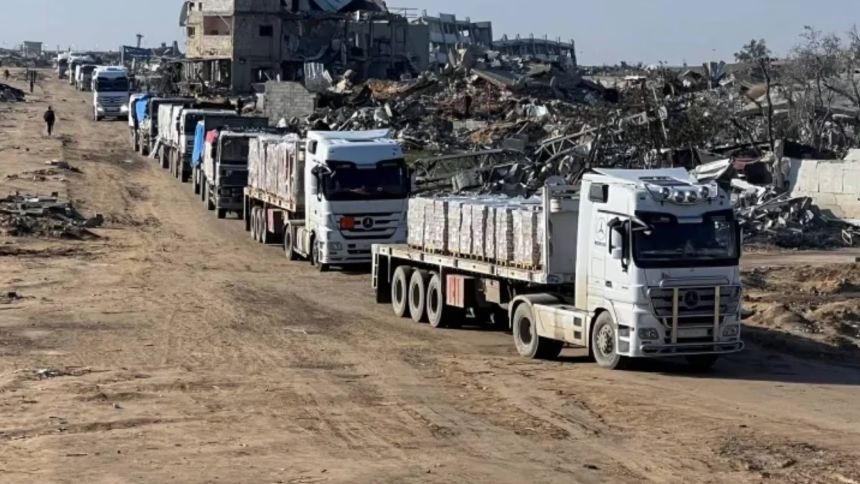
Gaza: UNRWA is facing unprecedented humanitarian and operational challenges as the war and ‘Israeli’ blockade continue to severely impact Gaza, the West Bank and East Jerusalem, a senior agency official has warned.
Speaking on Roya TV’s Akhbar al-Sabi‘a, UNRWA media adviser Adnan Abu Hasna outlined the scale of the crisis and the agency’s efforts to maintain essential services under what he described as extremely difficult conditions.
Despite extensive damage and insecurity, Abu Hasna said UNRWA remains the only stable provider of core services in Gaza, supported by a workforce of around 12,000 staff.
In the education sector, the agency has managed to bring about 300,000 children back into learning programmes, describing education as a vital lifeline for families affected by the conflict.
Health services have also expanded, with eight main clinics currently operating across Gaza, along with 32 fixed medical points and 108 mobile medical teams. These facilities are treating nearly 16,000 patients every day.
UNRWA continues to deliver environmental and social services, including the weekly collection of thousands of tonnes of solid waste, the supply of clean drinking water, and psychosocial support for hundreds of thousands of people.
Blocked aid humanitarian crisis
Abu Hasna warned that the humanitarian situation is being significantly worsened by restrictions on aid deliveries. He said ‘Israel’ is blocking the entry of food and relief supplies worth hundreds of millions of dollars, despite their availability nearby.
According to Abu Hasna, around 6,000 UNRWA aid trucks are currently stationed in Jordan and Egypt, carrying enough food to feed Gaza’s population for three months, as well as tents for 1.3 million Palestinians.
“Allowing these shipments into Gaza could dramatically improve living conditions,” he said.
Also Read | Ariana Grande Speaks Out Against Gaza Starvation Crisis
He added that the ongoing blockade has left refugee camps particularly vulnerable, with rain and sewage flooding worsening already harsh living conditions.
The continued denial of aid, he stressed, is deepening the humanitarian disaster and placing enormous pressure on UNRWA’s ability to meet basic needs.
Abu Hasna’s remarks underscore growing calls for urgent international action, as UNRWA struggles to sustain life-saving services for Palestinians amid ongoing conflict and restrictions.