


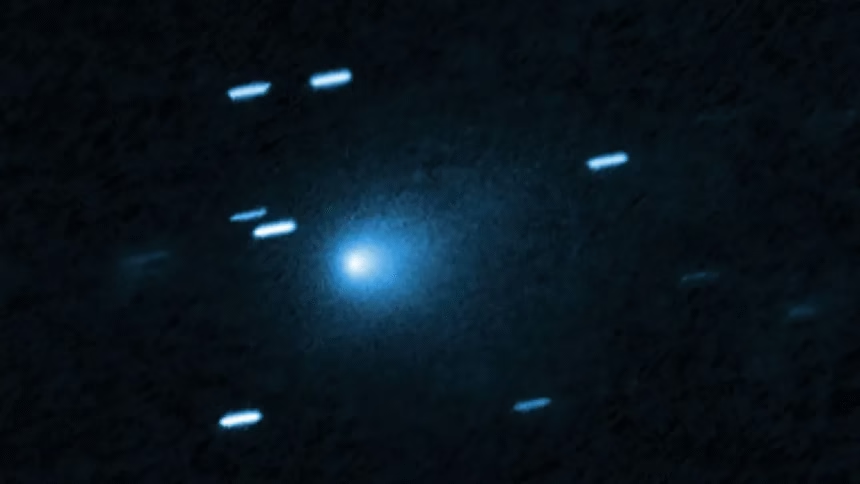
DUBAI – Astronomers monitoring the interstellar visitor known as 3I/ATLAS say the comet may have once again shifted colour this time developing a bluish hue following a sudden brightening while it was hidden behind the Sun.
The object, which is only the third known interstellar object to pass through our solar system, was originally discovered in early July 2025 travelling towards the Sun at more than 130,000 mph (210,000 km/h).
In earlier observations, 3I/ATLAS displayed a red colour, likely associated with dust grains, and then briefly appeared green, possibly due to the presence of gases such as dicarbon or cyanide.
According to the recent study, researchers revealed the comet appears to be “distinctly bluer than the Sun,” a finding that surprised astronomers since the blue tint was not observed previously.
The blue colouring may be linked to the release of specific gases such as carbon monoxide or ammonia escaping from the comet’s surface during its close approach to the Sun (perihelion on October 29).
At present, scientists caution that the colour changes now seen three times remain temporary and that the causes are not fully understood. They are also unsure whether this latest hue will persist.
3I/ATLAS will make its closest approach to Earth on December 19 2025, at a distance of about 168 million miles (270 million km).
Also Read | Albania appointed of world’s first “AI Minister”

This event is expected to provide a valuable opportunity for further study of its structure, composition and the processes driving its unusual behaviour.
As the comet becomes visible again in the Northern Hemisphere, amateur and professional astronomers alike are preparing to observe the rare interstellar visitor and probe the mysteries revealed by its multiple transformations.